Education Hub is the Textile Blog, It is an ultimate reference for textile students. It helps to update textile knowledge among the textile students, entrepreneurs, businessmen and over all the people who want to know textile. It is like a community blog. Anybody can publish textile related articles, thesis papers and any other reviews in this blog without copyrighted.
GSM is the short form for grams per square meter. All fabrics including towels have a measurement in weight, and the standard measurement is measured in grams per square meters. This number refers to the density of the towel. High-quality Turkish cotton towels are generally heavier and are more absorbent.
Towels can vary anywhere between 300 GSM and 900 GSM. The lower the number, the lighter and thinner the towel. For instance:
300-400 GSM – In this weight category the towels are lighter and thinner. Depending on its use, a lower GSM for the towels are manufactured for gym towel or a kitchen towel. A lightweight, shared beach towel might be around 350 GSM. Medium weight is 400-600 GSM. This weight is great for beach towels, bath towels, guest towels and so forth. Each consecutive gram weight –400, 500, 600– gets a little heavier, and a little more absorbent.
600-900 GSM – This is a premium, luxury weight. The towel will be denser, heavier, more absorbent. It will probably take a little longer to dry.
A terry towel is a textile product which is made with pile loops on one or both sides covering the entire ground surface or forming pile strips, pile checks, or other pile patterns (with hemming end or with firm selvages). Turkish Toweling fabrics structures form a class of warp pile termed terry pile in which certain warp threads form loops or curls on the face of the cloth. We may use one weft and two series of warp threads placed on two warp beams are necessary for the production of this cloth.
Cashmere Towels are made of Superior Ring Spun Quality Yarn. They are soft and luxurious and will provide a sense of comfort to your valued guests. Cashmere Towels are the best choice you will make by balancing luxury and cost.
History of Terry Weaving
The invention of the towel is commonly associated with the city of Basra, Turkey in the 17th century. These Turkish towels began as a flat, woven piece of cotton or linen called a postal, often hand-embroidered. The name word terry came from French word tire which referred to pile loops which were initially pulled by hand Long enough to make it absorbent cloth and wrap around the body. These postal manufactured were originally fairly narrow, but now are wider and commonly measure 90 by 170 centimeters (35 in × 67 in). Pestamel were used in Turkish baths as they stayed light when wet and were very absorbent.
Fibre Raw materials used for terry towels
Cotton
Bamboo
Model
Lyocell
Flax
Synthetics microfibers (polyester, nylon)
Cashmere
Yarns used for towels
Both open end and ring spun yarns can be used depending on designing parameters of terry towels. Normally three yarn components are used in manufacturing terry towels. Normal twisted yarn with normal twist factor for ground yarn, low twisted yarn with lower twist factor for pile yarn and low twist or normal twisted yarn for weft yarns.
Single or double yarns are used for all or few yarn components again depending on how the product has been designed. To make towels more absorbent and soft, twist less cotton ring spun yarns are also used.
For producing twistless yarn, cotton ring spun yarn with very low twist factor is covered with a water-soluble PVA filament yarn on yarn covering machine or is twisted on TFO machine the direction of double yarn twist is opposite to that of the single spun yarn twist, and the amount of twist factor is adjusted to normal twist required in the spun yarn. By this process, the PVA filament wrapped around the cotton yarn and the yarn was sufficiently strong due to the cohesion has given by the filament which makes it weave able and during finishing operations, the PVA yarn is dissolved in water.
Classification of Terry Towels
The classification of towels can be made according to construction, dimensions, pile presence on fabric front and back surfaces, pile height formation, pile structure, finishing and weight per square meter.
Construction of Terry Towels
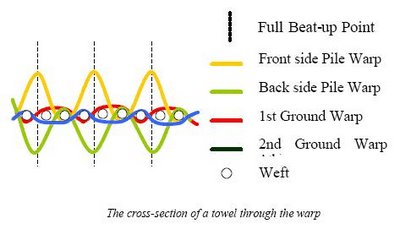
Terry towels are woven as 2, 3, 4, 5 or more pick terry weaves. The most common type is 3-pick terry toweling. The cross-section of a toweling through the Warps are divided into two systems as shown in Figure 3, pile warps and ground warps, whereas wefts consist of only one system. In basic Turkish Toweling, front side and back side pile warps and 1st and 2nd ground warp end form a 2/1 rib weave with each other.
The rib weaves which is formed by the pile warps is one pick ahead of the rib weave which is formed by ground warp ends. Warps are drafted throughout the fabric width 1:1 or 2:2 piles and ground warps. In 1:1 warp drafting order each ground warp end is followed by a pile warp end while in 2:2 warp drafting order each two ground warp ends are followed by two pile warp ends. In Figures 3a and 3b, the weave notation of 3 weft pile basic Turkish toweling is given in 1:1 and 2:2 warp orders.
As is seen from the weave diagrams in Figures a and b, the shedding of the ground warps is not synchronized with that of the pile warps. By this, the number of interlacing throughout the warp increases, and this strengthens the fabric. As it has been mentioned before terry towels can have pile loops on one or both faces. Different types of terry weave which have piled on one face and both faces.
Basic 3-pickup terry weave in 1:1 Warp Order
Basic 3-pickup terry weave in 2:2 Warp Order
G: Ground Warp FP: Front Face Pile Warp BP: Back Face Pile Warp Little block: Ground warp is over the weft Shaded: Front Face Pile Warp is raised over the weft X: Back Face Pile Warp is raised over the weft Empty space: Warp is lowered behind the weft
The picks used for toweling is between 15 and 25 picks/cm. And ends used are between 20 and 30 ends/cm. During the weaving of borders, the picks are increased 3 to 6 times the density in the pile areas Pile/ground ratio is described as the length of pile warp per unit length of fabric in the warp direction.
A practical way to find out this ratio is done by measuring a 10 cm length of toweling in the warp direction, then cut the pile warp from either end of the measured length and measure the total length of the removed pile end per 10 cm length of fabric. Pile warp length per 10 cm fabric is usually between 20-100 cm. This ratio has a direct effect on fabric weight and thickness. As the ratio increases, the weight and the thickness of the terry fabric increases.
The manufacturing process of Terry Towels
Spinning
This is the process where selected fibers are converted to yarns of desired counts needed for towels. Some integrated textile towelling mills produce their own yarns for towels. They purchase bales of cotton of a specific grade as per their working plan.
Mixing of fibers are formulated as per the required plan and are subjected to required atmospheric conditions before they are passed through the blow room line. Here strictly mill mixing plan is being followed. According to the mix plan selection of machines to process and their machine settings are made before mixing is allowed to pass through the blow room line.
Once planned results in the blow room process are accomplished then these fibers are passed directly through chute feeding to well-set carding machines and fibers are converted into slivers.
These carding slivers are tested for various technological parameters before they are passed to next process Drawing frames. These draw frames are set as per working plan and slivers are passed through for effective blending and parallelization of fibers. Draw frame slivers are tested for parameters and if passed they are further processed. Draw frame slivers may be semi-combed then again passed through draw frames before they are fed to roving frames (Speed frame).
Slivers are converted to rovings of specified hank as per spinning plan. Thereafter these roving bobbins are fed to ring frames well set with technological parameters as per spinning plan where they are converted to particular yarn counts to be used for terry towels.
These ring bobbins are fed to automatic winding machines where the yarn is converted to packages. These winding machines are also ser for different setting required as per spinning plan.
Whenever double yarns are needed for weaving terry towels the single yarns are processed on TFO machines to convert them to double yarns with defined twist factor and direction of the twist as required for towels.
Preparation of spinning plan is very critical and needs a lot of knowledge and understanding of spinning technology. Application of this spinning plan determines yarn parameters and yarn quality and hence needs close supervision from process control and quality control laboratory.
Comprehensive Weaving manufacturing plan is prepared as per terry towel set and construction.
Warping/Sizing/Drawing-in
Yarn packages are assembled on warping creel as per construction plan, required tensions are set on each yarn package and are processed on sectional or direct warping machines depending on single/double yarns are used.
All machine settings, machine speed is set as per instruction sheets of weaving plan. All warping sets made from single yarns are processed on sizing machines where a starch coating is applied on individual threads to make it weave able on weaving machines. Double yarns sets may or may not be passed through sizing machines. Single sized beams and double sized or unsized beams are taken to drawing in department and beams are drawn as per drawing in weaving plan to make them ready to load on weaving machines.
Loading of beams is high skill jobs which are to be carried out under the close supervision of weaving staff. Before machines are loaded on weaving machines, machines are to be well set, speeds adjusted as per an article by experienced, skilled and qualified weaving staff. Use of machine setting sheets as per weaving set plan is essential and important before the machine is set for production. Process control staff and weaving senior staff has to monitor the initial production of few towels and inspect on the machine and off the machine the various parameters of the towel and should exactly match as per weaving plan. Once passed the machine is allowed to go into production.
Mechanism of terry weave in terry fabric manufacturing, two sheets of warp threads run simultaneously, of which, one is kept under normal tension and other is kept under loose tension. The threads of normal tension warp sheet are for ground and threads of loose tension warp sheet are for the pile.
The sequence of operations during weaving for pile formation in 3-pick terry is given below:
Insertion of the first pick as per the design with loose beating
Allow a predetermined gap near the feel of cloth
Insertion of the second pick following the first pick with loose beating
Insertion of the third pick with heavy beating and bring all the three picks to the fell of the cloth.
Pile formation
Pile of the towel plays a major role for a towel for its water absorbency and other properties. Loop length is decided by the quality, weight, etc. as per requirements. Pile manufacturers use better quality yarn like combed, compact, hydro, zero twisted yarns.
Piles are made by different high-value fibers like superior qualities of cotton suvin, Giza, Pima, bamboo, modal etc. to get better absorbency and lint properties.
For ground yarn, comparatively coarser counts are used in OE and 2-ply option to give better strength and compactness in ground fabric.
Both piles and ground yarns are prepared in the same manner of warping, sizing, and drawing-in. Like other textile products shirting, suiting, sheeting fabrics, towel making has the same process sequences – desizing, bleaching, dyeing and finishing.
Grey inspection
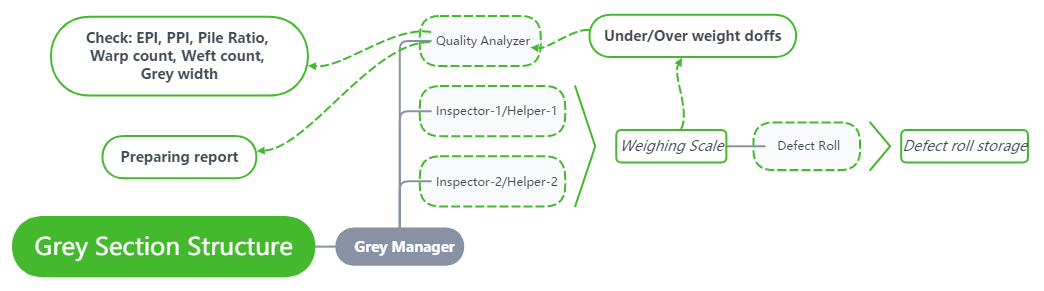
Once towels are manufactured on the looms and their production is monitored through process control the towel roles are cut as per specification sheet and brought to inspection room.
From inspection room storage selected quality rolls passed for quality as per processing plan are dispatched to process house for bleaching and dying operations.
Bleaching
These selected rolls are transported by using recommended trolleys to bleaching section and are bleached in J-Box machine which is a continuous bleaching machine. The fabric is treated with bleaching recipes such as hydrogen peroxide, caustic defoamers and other ingredients.
Reaction time and machine speed have to be set as per process plan prepared after considering all activity factors. After the roll is bleached it is sent to washing machines and washed thoroughly so that no trace of chemicals remains on the fabric. Then these rolls are dried and sent to Dyehouse. All procedural requirements are followed so that the rolls can be identified at any stage during processing and in storage.
Dyeing
As per requirement order from dye house, bleached rolls are transported to dye house for dying operations for various colours as per dye house planning sheets. Dried uncut rolls are taken to Dying machines for dying with vat color using vat dye receipt. This has proven over time to provide colorfast toweling after extensive residential laundering.
It is sent to washing machines and washed thoroughly so that no trace of chemicals and lose dye particles remain on the fabric. Then these rolls are dried on an air-drying machine and sent to folding cutting/folding and packaging department. All procedural requirements are followed so that the rolls can be identified at any stage to avoid mix-ups during processing and in final storage.
Cutting, folding, and packaging
As per final inspection plan, rolls are transported with special care to finish folding department.
Instruction techniques to follow are for visual inspection
Step 1: is to open these rolls and are cut as per instruction sheets
Step 2: is to stitch / ham towels
Step3: Each towel stitched is inspected by a quality inspector attached to a respective table. He has to ensure defect free towel on both sides, the label for passing and sent to final inspection table. The rejected towels are to be kept separately for operational departmental inspection
Step 4: Final inspection by a senior inspector passed, labeled and sent for final packaging and dispatching. Rejected towels are kept separately.
Quality Control
Quality assurance department plays an important role to monitor, check, and control each manufacturing activities and operations from receiving all raw material to the final dispatch of products. This is controlled through close supervision and active participation of on-line process control and off-line quality control laboratory. Most common defects found in terry towels are…
Objectional odors, Holes (two or more broken ends), abrasion mark, Bow, Skew, crease, oil stains, dye stains, miss pick, double picks, sharp press mark, fiber contamination, dye/bleach shade variations.
All Towels manufacturing mills need to have a strong quality assurance department which is capable to coordinate with production line and assist them to provide vital quality productivity information continuously.
All incoming inputs bought for the manufacturing process are thoroughly examined for their quality parameters as laid down by production plan before they are used during manufacturing operations.
Caring for your Towels
Wash towels at between 40-60°C
Wash with similar colours or use a colour catcher
Tumble dry towels to keep them soft and fluffy
Use fabric conditioners sparingly and not in every wash as they decrease absorbency
Wash separately from garments with zips or trims to avoid snagging
Shake towels before washing –this opens up the fibres slightly to allow the detergent to sink inside.
Key points to focus during production planning
Customers support. Fully understanding customers requirements and their expectations.
Process control providing products utilizing proven designs and manufacturing process.
Top employees developing a highly trained workforce that is skilled, motivated, understandable, empowered and fully accountable.
Robust supply chain: establishing strong relationships with world-class suppliers
continuous improvement: continually improve the efficiency of the business processes and operational activities and operations, quality management systems.
Calculations for terry towels to find the weight of ground warp, pile warp and weft yarn
Assumptions
Number of Ground Warp Ends = 694
Ground Warp Count = 25 tex x 2
Warp Crimp = 8%
Weft Yarn count = 34 tex
Number of Pile Warp Ends = 576
Length of pile part = 102 cm
Pile Ratio (for pile height)= 52:10 (52 cm of pile warp for 10 cm of cloth)
Whether your guests are only spending the night or enjoying a weeklong vacation, you’ll want to make sure they feel right at home with the luxury of quality hotel towels. Yet supplying the right amenities for your hotel’s bathroom or spa facilities is not as easy as it might seem. Browsing through our site, you will find different towel materials, border types, and other factors that may sway your decision. If you’re unsure about any of these factors, you’ve come to the right place. And even if you know that you need a bath sheet rather than a regular bath towel, for instance, this hotel towels guide breaks down important purchasing features like material, weight, and price so that you can make the best selection for your specific business.
Towel Sizes
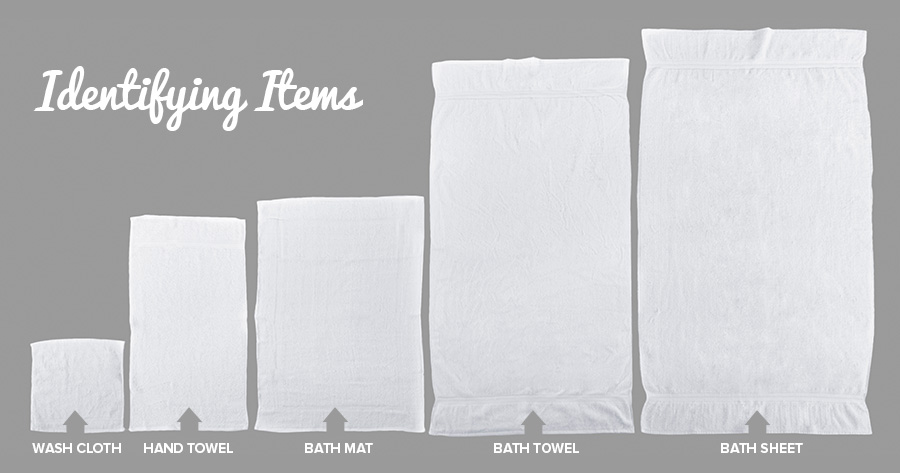
When you think of hotel towels, only wash cloths, hand towels, and standard bath towels may come to mind. However, to furnish your hotel bathroom with everything your patrons need for a clean and comfortable stay, will you also need bath mats? What about bath sheets or bath robes?
Bath mats resemble bath towels, but are slightly smaller in size. They are used on bathroom floors in place of a rug or carpet to prevent slippery floors after bathing or showering.
Providing ample space for drying off, a bath sheet has a larger length and a larger width than a bath towel. Because of its large size, it can drape around your guests sarong-style.
Bath robes also wrap around your guests, but they are designed with sleeves and a collar to better fit the body. Some include a wrap-around belt to keep the robe in place while your guests are freshening up or relaxing at the spa. They tend to get heavier when saturated with water, so they do not dry as quickly as bath towels.
Towel Weight
An important consideration when purchasing towels is their weight. The weight of a towel is measured in pounds per dozen, so it is very important to compare similar products together. You can compare bath towelstogether, or different washcloths with each other, as long as they have a similar size. The heavier the weight of your towel the more luxurious it will feel to your guests, and the more water it can absorb.
Don’t underestimate the significance of weight! Towels that weigh between 15 - 20 lb. per dozen are much more plush and heavy, as compared to thinner towels weighing only 5 - 10 lb. per dozen. The denser the towel, the more absorbent the towel. You might not need a towel weighing 15 lbs. per dozen when you’re at the gym, but your customers are sure to notice a difference in the luxurious material of your towels when lounging at your spa!
Towels with a lighter weight are a great economical choice. You can use these at motels, gyms, or athletic clubs where the thinner quality won't make a difference in the service. For higher end businesses like spas and resorts, heavier weight towels are a better choice. Some spa towels can have weights as heavy as 20 lb.! These heavy towels are plush and soft to the touch, adding an extra bit of luxury to your guests' overall experience.
Application
Now that you have an overview of the types of towels we carry, it’s time to decide which style is right for your venue. Our website takes into account that towels are used in many different locations, from the spa to the gym.
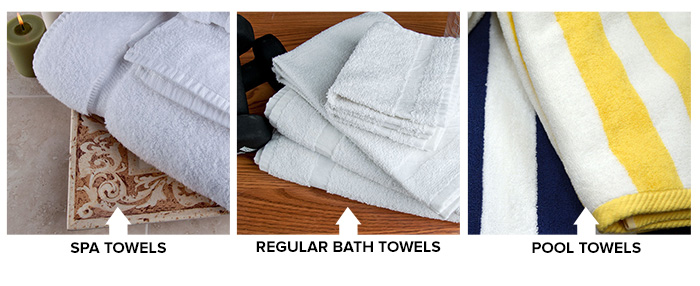
Usually made of premium ringspun cotton yarns, spa towels are designed for maximum whiteness and designed to provide the ultimate comfort for your guests relaxing at the spa. Generally thicker and softer, they tend to weigh an average of 15-20 lbs. per dozen.
Regular bath towels can be used in many locations, from gyms to health clubs, to schools, hotels, and more. They can be made from a variety of cotton yarns and cotton polyester blends. Offered in a clean white color to match your bathroom decor, they range from 5-17 lbs. per dozen.
Summer vacations aren’t complete without a trip to your hotel or resort’s swimming pool, and many pool towels feature fun stripes or bright colors to accommodate a sunny summer feeling. As opposed to regular hotel towels, pool towels are longer and have a similar soft, light feel as spa towels. Since pool towels are subjected to more water, they are more absorbent and designed to dry quickly in the sun.They range from 5-20 lbs. per dozen.
Material
Our website offers hotel towels in many different materials, the most familiar being 100% cotton. But what’s the difference between 100% ringspun cotton yarns and 100% combed Egyptian cotton yarns?
Cotton / polyester blend is made from 86% cotton and 14% polyester ring spun yarns. It is soft yet durable for frequent use. Great for businesses on a budget.
Open end cotton combines 100% cotton make up with an affordable price. Great for areas of high use.
100% cotton is extremely absorbent, lush, and softer than most cotton blended fabrics. A good fit for any setting.
Ring spun cotton is made of 100% cotton with an extra silky feel. It’s a long lasting choice for casual to upscale locations.
Zero twist cotton is 30% lighter in total weight than regular twisted cotton for a soft feel. Requiring less cotton production than other types, it is good for the environment and the fabric dries faster to save energy.
Egyptian cotton is made from soft and silky natural cotton yarns. It has excellent absorbency and drying properties. A top-quality make-up, it is designed to meet the needs of your upscale establishment.
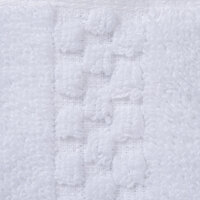
As seen in the table above, towels can have either a cam border or a dobby border. A cam border has a flat weave texture usually featured on the top and bottom of the towel. A dobby border has a decorative weave that can consist of many unique designs, including checkers, stripes, and other patterns. A piano dobby border features elegant stripes lining the edge of the towel that resemble piano keys. Both cam and dobby borders are typically woven an inch or two from the edge of the towel. Dobby borders are considered more upscale than cam borders, which is something you may want to consider at your upscale venue!
Once you choose the right towels for your establishment, it’s just as important to keep them fresh and clean for each and every guest. Though different hotels and businesses have different wash cycles, here are the steps most commonly used to wash towels:
Flush - Run the towels underneath water before adding chemicals.
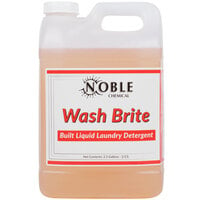
Wash - Wash the towels in hot water with detergent. Noble Chemical has a great line of detergents and pre-spotters recommended for any business. Check out the laundry chemicals buying guide to lead you in the right direction.
Brighten - Towels are not recommended for use with bleach. If necessary, a non-chlorine bleach or an oxygen bleach alternative can help maintain the quality and appearance of the material.
Rinse - Wash away all of the dirt, germs, and unwanted stains to make the towels pure white once again.
Extract & Dry - Extract the towels immediately after the final rinse cycle to prevent mildew. Use high heat to dry the towels to destroy any remaining germs.
Textile technology is a program of study that can cover a broad range of topics, from chemistry and physics in textile production to textiles used in apparel and interior design. Keep reading to discover education and career options in this field.
Inside Textile Technologies
Textile technology programs teach the science of creating and enhancing fibers, fabrics and other textiles used in manufacturing, apparel, healthcare and consumer products. Training in textile technology prepares students for a number of different career paths, such as textile engineer, interior designer, materials scientist and researcher. If any of these occupations interest you, check out the article links from Study.com listed below.
Education Information
Courses in textile technology programs can include textile chemistry, physics, molecular studies, biomedical materials and material composition. Students learn how to create and test fibers from both natural and synthetic sources. Technology programs in textiles and materials can be found in engineering or textile colleges at the undergraduate and graduate degree and certificate level. Online and hybrid programs are also available, often at the master's degree level.
Textile programs in apparel and interior design are offered at the undergraduate and graduate level. Generally, these programs focus on the development and production of textiles used in clothing, homes and consumer products. Some programs offer concentrations in textile development, textile design, merchandising or marketing. Often, textile programs focusing on apparel are offered through consumer science departments, schools or colleges.
To find out more about degree programs related to textile technologies, read over the following articles.
How to Choose a Textile Design Program
Textile Schools
Textile Production Associate's Degree
Graduate Level Textile Programs
Distance Learning Options
Many schools are offering textile programs and classes online to suit the needs of working students. Visit the links below to get more details about distance learning options.
Online Textile Courses
Textile Art Programs Online
Online Fashion Courses
Career Options
Training in textile science offers a variety of career options, including in the manufacturing and design industries. Take a look at these articles to get more insight into what these possible career paths entail.
Textile Manufacturer
Textile Design Job Information
Textile Designer
Interior Designer
Employment Information
According to the U.S. Bureau of Labor Statistics (BLS), materials scientists, such as the ones who work with textiles, earned a mean annual salary of $91,160 in 2013 (www.bls.gov). Material engineers earned an average of $89,930, and interior designers made $54,200. The BLS projected that employment of material scientists will increase by six percent from 2012 to 2022, while employment of material engineers is expected to change little if at all during the same time period. Interior designers can expect to see faster job growth in their field at a rate of 13%
A woven Terry towel consists of five parts. These are the Hem, Terry Bar, Border, Body(Terry), selvedge. Every towel does not have to contain all of these parts. The pile area is considered the toweling part of the towel. The beginning and end sections are the tightly woven areas of a towel which come before or after the pile fabric part and prevent this pile area from unraveling. The selvage contains fewer number of warp end s than the pile area, woven without pile as a flat weave and has the purpose to reinforce the towel sides. Hem at the beginning and end of the towel stitched with two fold. Border mainly used for decorative purpose.
Terry Towel Properties to be considered
- Fibre Content
- Ph value
- Tensile Strength
- Measurement of Dimensions
- Mass of Towel
- Absorption time
- Wash care instructions
Terrycloth, terry cloth, terry toweling, terry, or simply toweling is a fabric with loops that can absorb large amounts of water. It can be manufactured by weaving or knitting. Toweling is woven on special looms that have two beams of longitudinal warp through which the filler or weft is fired laterally. The first industrial production of terrycloth towels was by the English manufacturer Christ.
There are two types of terry fabrics:
Towel Terry is a [woven] fabric with long loops that can absorb large amounts of water. Its content is usually 100% cotton, but may sometimes contain polyester.
French Terry is a fabric, used in men's, women's and children's clothes. One of its sides is flat, while the other side is with cross loops. It is either 100% cotton or contains polyester with inelastic (Lycra). It is often warp knitted, and the term French Terry is colloquially used for all warp knitted Terry.
It is the length of loops that determines how much fluid is absorbed by the cloth as longer loops provide more surface area to absorb and come in contact with the fluid.
Items that may be made from terrycloth include babies’ nappies (UK English) or reusable diapers (US English), towels, bathrobes, bed linen, and sweatbands for the wrist or head. Terrycloth is also sometimes used to make sweat jackets. Terry toweling hats with a shallow brim were once popular with cricketers (like English wicket keeper Jack Russell), but are no longer in fashion.
An alternative fabric used for towels is waffle fabric. A modern synthetic alternative is microfiber.